AI didn’t change what people buy. It changed how they find it.
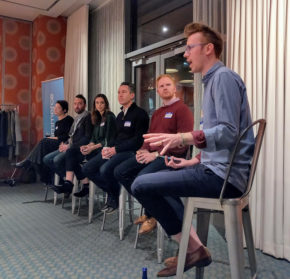
That was the through-line at iPX in Austin this month, and it’s a sharper frame than the one the industry keeps reaching for. The story isn’t that AI is coming for commerce. It’s that discovery is being rebuilt in real time, while the fundamentals underneath it barely moved.
That distinction matters, because it changes what publishers should be worried about.
Discovery Moved. Shopper Logic Didn’t.
A figure cited at iPX put a number on the shift: roughly 1 in 6 U.S. adults now use AI for shopping help every single week. That’s not fringe behavior anymore — it’s growing fast enough to reshape where purchase research starts.
But the part that’s easy to miss in the panic: Great products still win.
AI changes how a product gets surfaced, not why someone buys it. The clearest signal? Category performance. Recession-proof staples like groceries, household essentials, and apparel are outperforming tech right now. Shoppers are still shoppers. The product discovery path just runs through a different door.
The takeaway for publishers isn’t “build a new business.” It’s “make sure the business you have is findable in a layer that didn’t exist two years ago.”
The Attribution Problem Nobody Has Solved Yet
Here’s what actually should keep performance teams up at night:
Shoppers don’t research in one place anymore. They’ll start with one AI model, cross-check with another, then run a final search on Google before they buy. By the time a conversion lands, the trail of where intent started has gone cold.
Last-click attribution was already a blunt instrument. In a multi-model research path, it’s going to actively mislead — crediting the last touch while the AI conversation that did the persuading goes uncounted.

The most concrete idea floated at iPX tried to close that gap directly: post-purchase surveys that ask shoppers where they came from, offering a discount in exchange for sharing their AI chat history. It’s a smart workaround, but it leans on the one thing the Answer Era just broke: a shopper’s ability to remember, and honestly report, where their research began.
Which is the real point. Measurement is the open problem of the Answer Era, and the partners who acknowledge that early will make better decisions than the ones still trusting their last-click dashboards.
Getting Found Inside AI Answers Is a Strategy, Not Luck
If discovery is moving into AI, the obvious question is how you show up there. The working approach that emerged at iPX is more concrete than most “optimize for AI” advice:
- Figure out which prompts and topics are relevant to your audience.
- See which partners, competitors, and sources keep surfacing in those answers.
- Then concentrate your content testing there, instead of spraying effort across everything.
Credibility has always shaped discovery; it’s the idea behind Google’s E-E-A-T framework. AI carries that forward, surfacing sources it considers trustworthy. That makes trust a ranking input, not just a brand value — and for publishers, that’s a real edge. The authority you’ve spent years building isn’t decorative anymore. It’s functional.
A New Category of Players Is Already Moving In
The space around AI-driven discovery is filling up quickly. Coupon, loyalty, and cashback startups are pushing in, alongside AI companies positioning themselves on the deals side. Everyone can see the shift, and they’re all angling for the same real estate.
That’s exactly why knowing where you stand is about to matter more. As more players crowd into AI answers, surfacing there gets harder, and most publishers have no idea how visible they currently are.
New tooling is forming to close that gap. Visibility platforms like Profound.ai and Gumshoe.ai answer a question that didn’t exist a couple years ago: How often does my brand show up in AI answers? It’s early, but getting a baseline read now — before the space gets more crowded — beats guessing later.
What We’re Watching Next

The publishers who win the Answer Era won’t be the ones who panicked, and they won’t be the ones who waited it out. They’ll be the ones who treated AI discovery as a channel to measure, test, and optimize rather than a threat to survival.
The fundamentals are intact. Good products, trusted sources, real audiences. What’s changed is the path between them, and the partners who map that path early will own the next stretch of growth.
If you’re rethinking how your audience discovers products right now, that’s a conversation we’re having across our network every week. Let’s compare notes.