For most of the last decade, deal distribution ran on one default setting: Publish the article, optimize for search, wait for Google to send the traffic. That setting is breaking. Across our partner network, direct and search traffic is down sharply — in some cases, by more than half. The publishers holding revenue steady aren’t the ones waiting for it to come back. They’re the ones who stopped treating the article as the only place a deal can live.
That shift is the real 2026 story, and it isn’t “AI changed search.” Everyone’s said that already (including us!). The more useful question is what publishers are doing about it: rebuilding distribution as a portfolio of channels built around the article, not in place of it.
Newsletters are carrying commerce again
The inbox turned out to be the most durable channel publishers own. It doesn’t depend on an algorithm deciding to surface a page, and it reaches an audience that already opted in. Partners are noticing.
One publisher runs influencer-style deal content across seven separate newsletters. Some fold a single recommendation directly into the editorial voice of the newsletter itself, framed the same way an editor would recommend any product or brand. Others are running sponsored units or full sends. And some publishers are combining these performance fixtures into a dynamic strategy based on inventory demand.




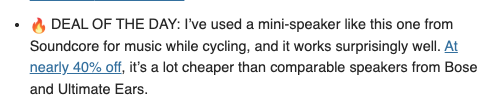
The takeaway is blunt. If you aren’t running deals in your newsletter, you’re leaving the steadiest channel you’ve got on the table. Publishers who’ve kept their newsletter as an editorial stronghold may balk at putting deals in it, but in 2026 every send should carry a revenue-driving placement.
Social became a channel, not a campaign
For a long time, social deal content was treated as a one-off: a post when there was bandwidth, a boost when something was hot. The partners pulling ahead have stopped waiting for a reason and started treating it as a standing channel, the same way they would a newsletter.
And just like newsletters, there’s more than one way to do it well. The clearest native example we’re seeing right now is publishers running deal posts in the same feed and in the same voice as their regular content. One tech publisher posts deals a day or two apart from its usual technical coverage: no separate account, no special framing. It’s just another thing they post.
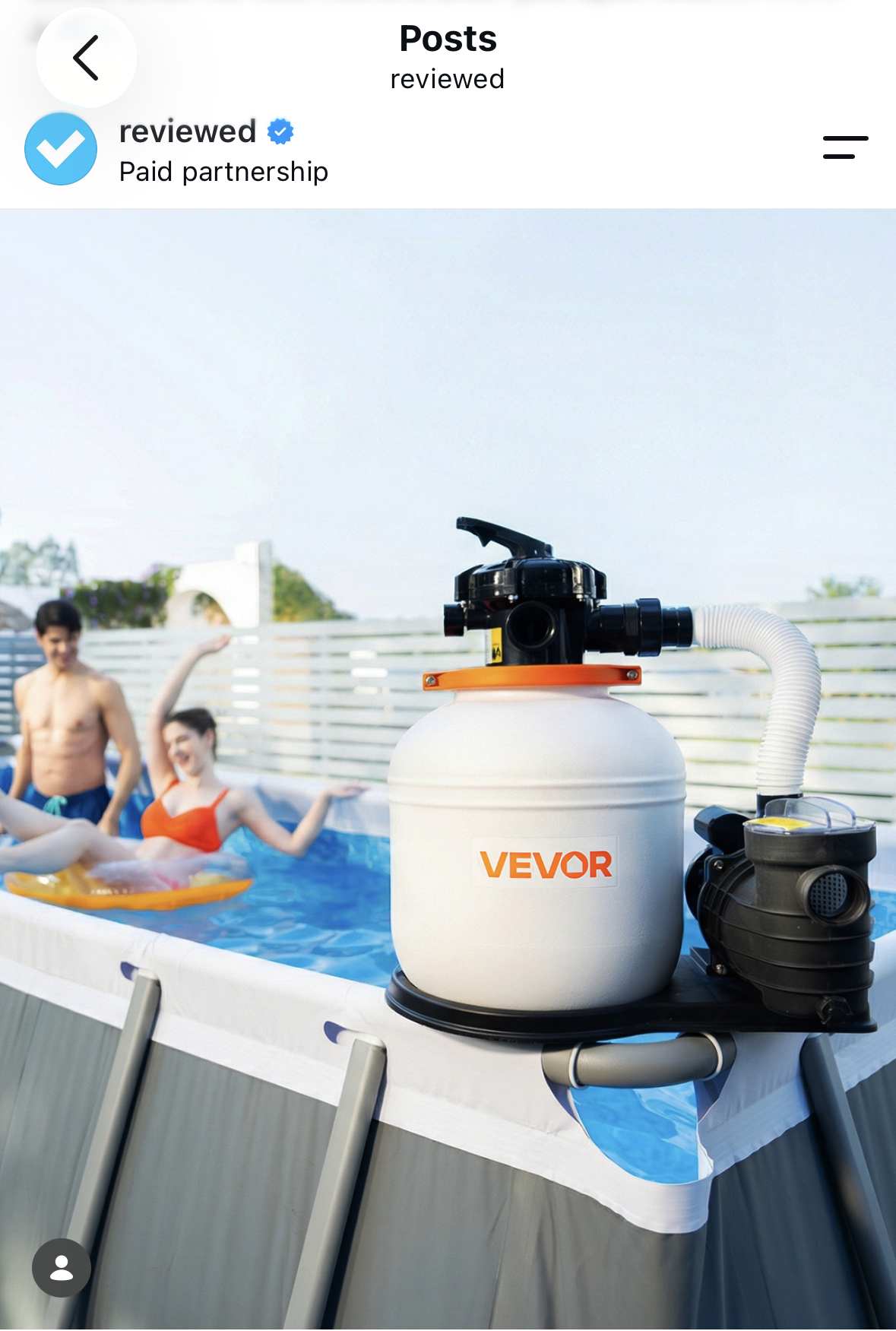
Others lean on the partnership: a sponsored post built with a brand, framed the way any collaboration would be. And plenty of what looks like deal content on social isn’t the deal itself. It’s a post pointing to an article, a roundup, a full write-up living somewhere else. The post does the stopping-the-scroll work; the article does the converting.
All three modes work. What doesn’t work is treating social like it needs permission, or waiting to post until something feels big enough to justify it. Publishers already comfortable being direct in a newsletter should extend the same confidence to social: native, sponsored, or a post that simply points to the goods — run consistently — beats an occasional post that only shows up when the deal feels impressive enough.
That confidence is already paying off for some. A major tech publisher has spent two years building a social-first deal strategy, and others are now asking for weekly, social-ready deal drops they can plug into a standing cadence.
That carries a supply-side implication for us, too. Social-ready deal assets, built to drop into a post or newsletter without a publisher rebuilding them, are quickly becoming table stakes rather than a nice-to-have.
Video stopped being content and became distribution

Here’s the data point that should reframe how publishers think about video: Embedded video is performing better in AI-generated answers. As discovery shifts toward AI summaries, a page with video has a structural edge in getting surfaced.
That changes the math. Video isn’t just a way to hold attention longer; it’s becoming a distribution mechanism in its own right. We’ve already put this into practice with a few partners — embedding short-form video directly inside deal articles rather than treating video as a separate asset. Expect more publishers to experiment here as the AI-search advantage becomes clearer.
Distribution is a portfolio now
Pull these together and the through-line is obvious. The publishers staying ahead run newsletters, social, and video as one coordinated portfolio, no longer pinning revenue on one bet. Search dependence didn’t stop working because search got worse. It was always a single point of failure, and the AI shift exposed how fragile that was.
The hard part for most partners isn’t believing this. It’s that almost none of them have a benchmark for what “good” looks like across these new channels. They’re rebuilding distribution with no reference point for which formats convert, at what frequency, for which audiences.
That’s where a network-wide view, like the one we provide at Stack, earns its keep. We see deal performance across thousands of brands and a wide span of publishers: newsletter, social, video, and article placements side by side. The partners who treat that data as their compass move faster and waste fewer cycles guessing.
So no, the article isn’t going anywhere. If anything, it matters more. It’s still the anchor of the whole system: the asset with the most depth, the strongest SEO and GEO surface, the piece every newsletter blurb, social cut, and video clip gets built from.
What changed isn’t the article’s value. It’s the article’s monopoly. For a decade, the article was the entire distribution strategy. Now it’s the hub everything else spins out of. The article does the heavy lifting, and the rest of the portfolio carries it into every channel your audience actually shows up in. Your best placement in 2026 isn’t an article — it’s an article that doesn’t stop at the page.